How Interior Design Transforms Your Mental Health
Have you ever walked into a room and instantly felt a weight lift off your shoulders? Or perhaps you have entered a space that immediately made you feel anxious and eager to leave? These reactions are not random. The environments we inhabit deeply influence our emotional and psychological states.
The relationship between your surroundings and your mood is a core focus of environmental psychology. Every choice you make for your home—from the color of the living room walls to the placement of your sofa—sends distinct signals to your brain. By understanding how interior design affects mental health, you can actively shape your home into a supportive sanctuary that boosts your mood, enhances your focus, and reduces daily stress.
Table of content
Table of Contents
Key Takeaways:
- Understand the direct psychological link between spatial design and emotional well-being.
- Learn how specific color palettes calm the nervous system or boost energy.
- Discover the impact of natural and artificial lighting on your circadian rhythm.
- See how furniture arrangement and decluttering reduce subconscious anxiety.
- Explore the mental health benefits of bringing natural elements indoors.
- Find out how aligning your space with your personal style fosters a sense of belonging.
The Psychology Behind Your Living Space
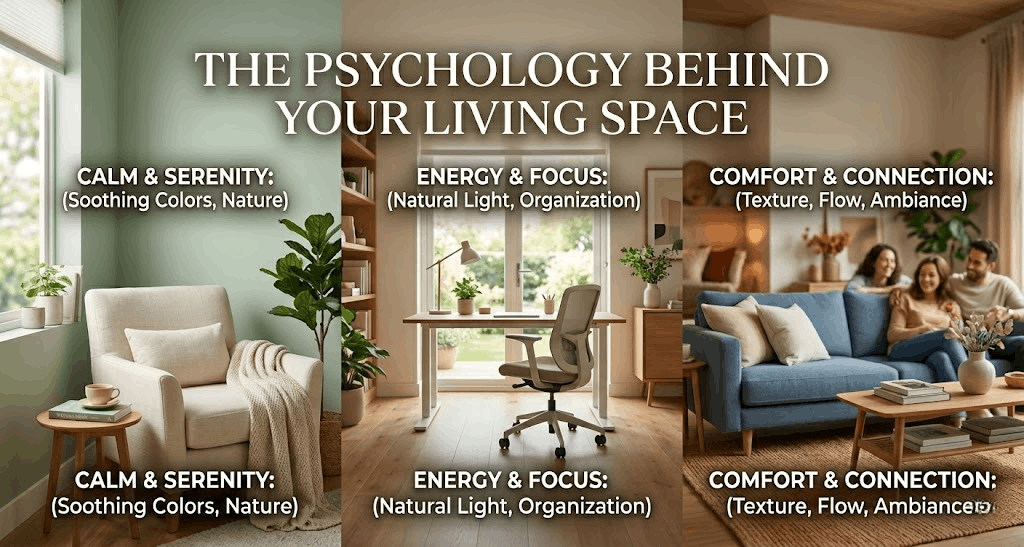
We spend the vast majority of our lives indoors. Because of this, our homes serve as the primary backdrop for our lives. When your home feels chaotic, dark, or cramped, your brain interprets the environment as a threat. This triggers the release of cortisol, the primary stress hormone. Chronic exposure to stressful environments leaves you feeling drained, irritable, and overwhelmed.
Conversely, a thoughtfully designed space promotes the release of dopamine and serotonin. These neurochemicals help you feel safe, relaxed, and happy. Good interior design does not just make a room look beautiful; it functions as a tool for emotional regulation. It gives you control over your sensory input, allowing you to create zones for deep focus, restful sleep, and joyful socialization.
Color Psychology: Painting Your Mood
Colors hold incredible power over human emotion. The hues you select for your home dictate the overarching mood of every room. When choosing a color palette, consider the primary function of the space and how you want to feel while you are in it.
Cool Tones for Ultimate Relaxation
Cool colors, such as soft blues, gentle greens, and muted lavenders, naturally lower blood pressure and slow the heart rate. These shades mimic the calmest elements of nature—the sky, the ocean, and open fields.
- Bedrooms: Pale blues and soft greens promote deep, restorative sleep.
- Bathrooms: Crisp, cool shades create a spa-like atmosphere that encourages unwinding after a long day.
- Home Offices: Certain shades of blue improve focus and productivity by reducing visual distraction.
Warm Shades for Energy and Connection
Warm colors like yellow, orange, and red stimulate the senses. They evoke warmth, passion, and energy. However, you must use them thoughtfully, as overusing vibrant reds or oranges can induce restlessness.
- Kitchens and Dining Rooms: Warm yellows and earthy terracotta tones stimulate appetite and encourage lively conversation.
- Living Rooms: Soft, warm neutrals mixed with mustard or burnt orange accents make a space feel cozy, inviting, and highly sociable.
The Grounding Power of Neutrals
Whites, grays, beiges, and earthy browns provide visual resting places. A room filled entirely with bold colors overwhelms the eyes and the brain. Neutrals offer a balancing foundation. They allow you to introduce colorful art, textiles, and plants without causing sensory overload.
Let There Be Light: The Power of Illumination
Lighting dictates the rhythm of your biological clock. Your circadian rhythm relies on light cues to manage your sleep-wake cycle, digestion, and mood. Poor lighting design easily leads to headaches, eye strain, and fatigue.
Maximizing Natural Sunlight
Sunlight acts as the ultimate mood elevator. Exposure to natural daylight boosts vitamin D production and helps ward off seasonal depression.
- Window Treatments: Keep curtains and blinds light and sheer in living areas to maximize daylight penetration.
- Mirror Placement: Hang mirrors opposite windows to reflect natural light deeper into dark rooms.
- Furniture Layout: Place desks and reading chairs near windows to capitalize on natural light during the day.
Layering Artificial Light
When the sun sets, your artificial lighting choices take over. Harsh, cold, fluorescent overhead lights mimic the bright midday sun, confusing your brain and making it difficult to wind down. Instead, interior designers use layered lighting to create adaptable, soothing environments.
- Ambient Lighting: This provides the general illumination for a room. Use dimmers to control the intensity.
- Task Lighting: Desk lamps, under-cabinet lights, and reading lamps provide focused light for specific activities, reducing eye strain.
- Accent Lighting: Sconces and picture lights highlight architectural features or artwork, adding depth and warmth to the room.
- Bulb Temperature: Use warm-white LED bulbs (around 2700K to 3000K) in living rooms and bedrooms to create a cozy, relaxing glow that signals your brain it is time to rest.
Furniture Arrangement: The Flow of Energy
How you move through your home impacts your subconscious stress levels. If you constantly bump into a coffee table or have to squeeze past a large armchair, your brain registers mild frustration multiple times a day. Over time, this poor traffic flow creates a baseline of irritability.
Creating Breathable Pathways
Leave ample space between furniture pieces. Interior designers call this negative space. Negative space gives your eyes a break and makes a room feel expansive and breathable. Ensure all walkways are clear and that doors can open fully without hitting obstacles.
The Psychology of Conversational Groupings
If you want to foster connection and reduce feelings of isolation, pay attention to how you arrange seating. Pushing all your furniture against the walls creates a sterile, waiting-room effect. Instead, pull sofas and chairs toward the center of the room. Arrange them to face one another. This creates intimate, conversational circles that encourage engagement and make guests feel welcome.
Decluttering and Mental Clarity
Physical clutter directly translates to mental clutter. When your visual field is packed with unorganized items, your brain works overtime to process the stimuli. This constant low-level processing causes mental fatigue. Implement smart storage solutions like baskets, built-in shelving, and dual-purpose furniture to keep everyday items out of sight. A tidy, intentional space restores your sense of order and capability.
Biophilic Design: Bringing the Outdoors In
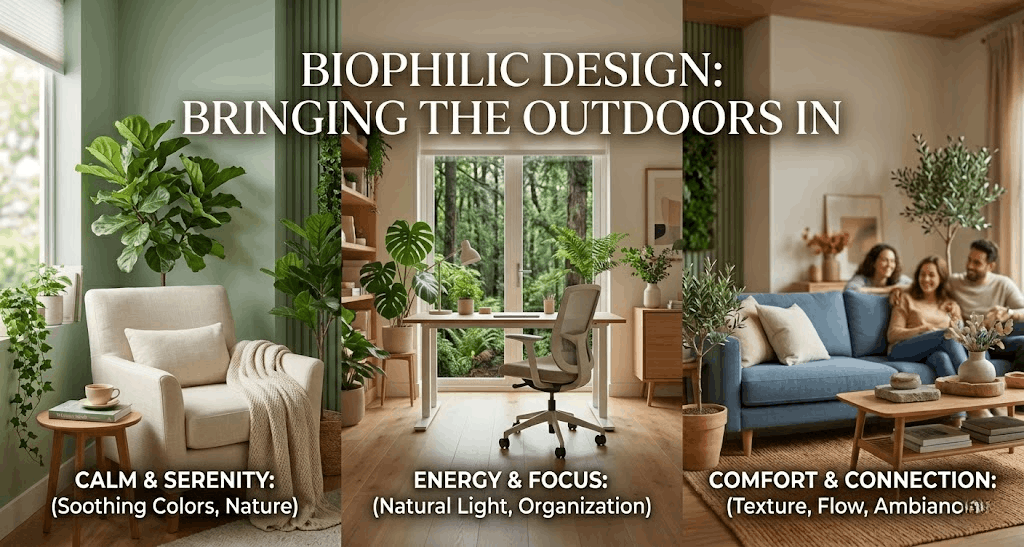
Biophilic design stems from the idea that humans possess an innate, evolutionary need to connect with nature. Integrating natural elements into your home drastically improves mental health, lowers stress, and accelerates cognitive recovery.
The Magic of Houseplants
Indoor plants do much more than look pretty. They purify the air by removing toxins and releasing fresh oxygen. Furthermore, caring for plants provides a therapeutic routine that grounds you in the present moment. Adding low-maintenance plants like snake plants, pothos, or peace lilies brings vibrant, organic life into sterile environments.
Embracing Natural Materials
Synthetic materials often feel cold and disconnected. Incorporating raw, natural materials connects you to the earth and provides tactile comfort.
- Wood: Exposed wood beams, hardwood floors, or solid wood furniture add warmth and grounding energy.
- Stone and Clay: Natural stone countertops or handmade ceramic vases introduce organic textures that soothe the senses.
- Natural Fibers: Jute rugs, linen curtains, and cotton throws offer softness that invites relaxation.
Finding Your Style for Mental Well-Being
A well-designed home must reflect your personal identity. A sterile environment that looks like a catalog page rarely provides emotional comfort. Surrounding yourself with items that hold positive memories—family photos, travel souvenirs, or meaningful artwork—anchors you emotionally and reinforces your sense of self.
However, choosing the right overarching aesthetic is crucial for maintaining visual harmony. If you mix too many conflicting styles, the space feels chaotic. To create a cohesive environment that supports your mental health, explore our comprehensive resources. You can read the ultimate guide to interior design styles to find the aesthetic that best aligns with your personality and lifestyle. Finding your unique style ensures your home feels like a true extension of yourself.
Arch Aura Axis: A Decade of Design Excellence
Creating a home that perfectly balances aesthetics and mental well-being takes experience, intuition, and an expert eye. That is exactly what we bring to the table. Arch Aura Axis has spent over 10 years mastering the art of spatial design in the physical world. For a decade, we have transformed houses into homes, offices into hubs of creativity, and commercial spaces into welcoming environments.
Now, we are thrilled to announce that we have officially launched our services online. We are bringing our 10+ years of offline expertise to the digital space, making high-quality, mood-boosting interior design accessible to you, no matter where you are. We understand the profound impact that a well-designed space has on your mental health, and we possess the skills to turn your vision into a reality.
Ready to Transform Your Space?
Your home should be your ultimate refuge. It should nurture your mind, comfort your body, and inspire your daily life. If your current environment leaves you feeling stressed, uninspired, or exhausted, it is time for a change. You do not have to navigate the complexities of color psychology, lighting design, and spatial planning alone.
Let the experts at Arch Aura Axis help you create a space that looks beautiful and feels incredible. Take the first step toward a healthier, happier home environment today. Reach out to us to discuss your vision and let us craft a personalized design strategy tailored to your exact needs.
Ready to boost your mood through transformative design? Visit our Contact Us page to schedule your consultation and start your design journey with a team backed by a decade of proven excellence.